The hadith on sadaqah jariyah lists three deeds that continue to benefit the believer after death: ongoing charity, beneficial knowledge, and a righteous child who prays for them.
When a person dies, their deeds come to an end except for three: ongoing charity, beneficial knowledge, and a righteous child who prays for them.
This hadith is in Sahih Muslim. It is worth noticing that beneficial knowledge is its own category.
Sadaqah jariyah on its own is broad. A well, a masjid, a fruit tree, a home - anything that continues to benefit people after the giver has moved on. Beneficial knowledge is narrower. It is specifically the transmission of something true, from one person to another, that the second person then either acts on or passes on themselves.
A school sits in the intersection of the first two. It is a building, funded once, that continues to serve. It is also the place where beneficial knowledge - reading, arithmetic, the Qur'an, the capacity to reason and to communicate - is transmitted from teachers to children, and from those children, eventually, to their own children.
This is why, when scholars discuss which forms of sadaqah jariyah carry the deepest reward, schools come up consistently.

Let me describe, specifically, what we build.
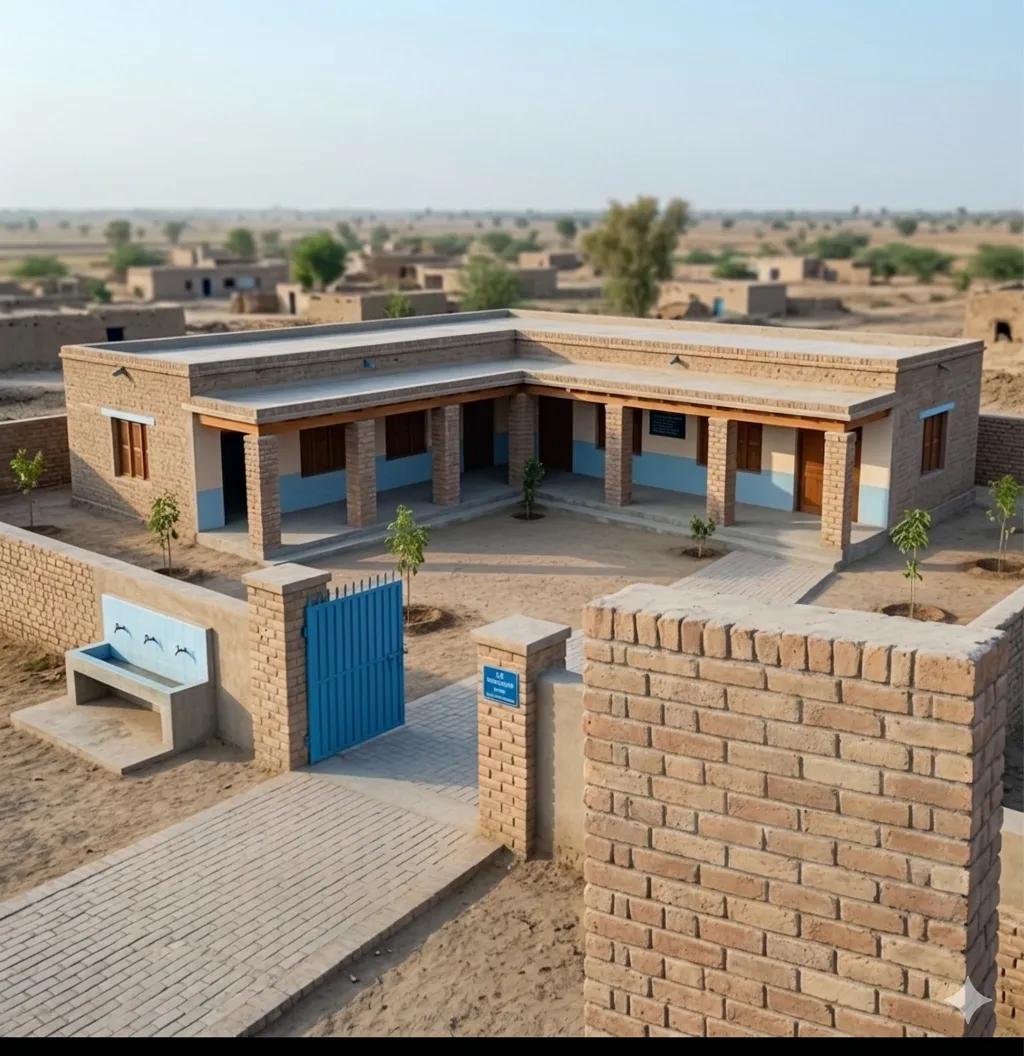
The Purpose-Built Classroom in South Asia, at £6,500 in total, is a single classroom. Solar-powered, properly ventilated, with desks, whiteboards, and the materials a teacher needs to do their job. It accommodates 40 to 60 children for daily lessons. It is built to last 20 years or more. One share is £65.
The Fully Equipped School in Pakistan, at £75,000 in total, is a complete school. Multiple classrooms, toilets, a water point, teaching staff, and the learning materials needed for 200 to 400 children to be educated every year, for the next three decades. One share is £750.
These are not abstract figures. They are what we have worked out with our delivery partners, based on the real costs of construction, staffing, and ongoing operation in the locations where the schools will be built.
Now, who is educated in these schools.
In parts of Pakistan - particularly rural Sindh and Balochistan - primary school enrolment for girls falls below 50%. In some districts, it falls below 30%. The reasons are well-documented. The school is too far away. The school is overcrowded or in poor condition. The parents do not see the return on sending their daughter, given the distance and the risk. The teacher has not been paid in months and has stopped showing up.
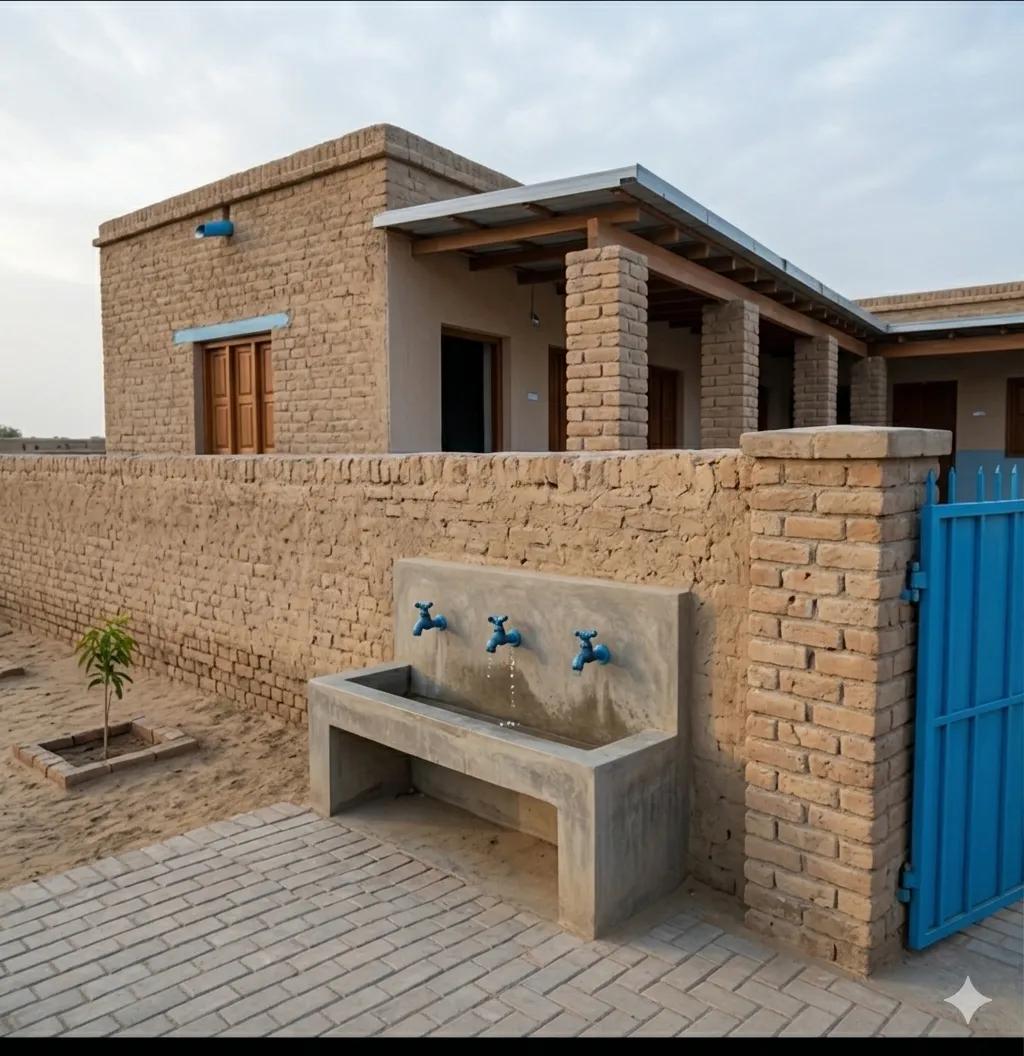
A school that is physically present, that is staffed, that has working facilities, does not single-handedly solve girls' education in Pakistan. But it removes the primary reasons parents give for not enrolling. It changes the calculation at the household level.
Parents who would otherwise have kept a daughter at home, because the nearest school was two hours walk away through difficult terrain, now have an option within reach. Parents who had previously sent a son but not a daughter, because they could only afford one child's education, now face different arithmetic because the school itself is free. Parents who had not thought about schooling at all, because nobody in the village had been to school, now see other children starting and reconsider their own.
The first generation of children to go through a new school is always the most striking. They carry themselves differently from their parents by the time they finish. Not in arrogance - usually in the opposite direction. They are the ones who teach their younger siblings what they learned. They are the ones who read letters for the older generation. They are the ones who make decisions in the family that previously would have been made by someone else.
By the second generation, the change has compounded. Children whose parents went to school expect to go themselves. Literacy stops being a novelty and becomes the default. The community's economic options expand. A village that had been a net sender of young people to cities looking for manual work becomes a village where some of those young people stay and start small businesses, or return after qualifying in a trade.
None of this is guaranteed. Education is not magic. A school that is built and then badly run, or that is staffed by teachers who do not believe the children can learn, produces less than a school that is well-run. The quality of the delivery matters.
That is why we list schools carefully. Our delivery partners are vetted. The schools we commission are sited where the need is genuine and where the local community has asked for them. They are staffed by teachers who are paid properly, because an unpaid teacher is a fiction. They are monitored after completion, because a school that goes dark three years in is not sadaqah jariyah - it is a building with our name on it, and that is worse than having built nothing.
For a donor, funding a school is the most structurally complex thing SDQA currently lists. A well requires drilling. A masjid requires a build crew. A school requires construction and staffing and a multi-year commitment to keep it operating. That complexity is why the price per share is higher on the school than on the other projects.
It is also why the return - in the specific, accounting-of-the-akhirah sense the hadith describes - is potentially the deepest.
Every child who learns to read in a school you funded carries that capacity forward. Every child who becomes a teacher, a doctor, a scholar, a mother who raises literate children, extends the chain of beneficial knowledge further. The original donor may be long gone by the time the last link is forged. But the hadith is unambiguous about where the reward flows.
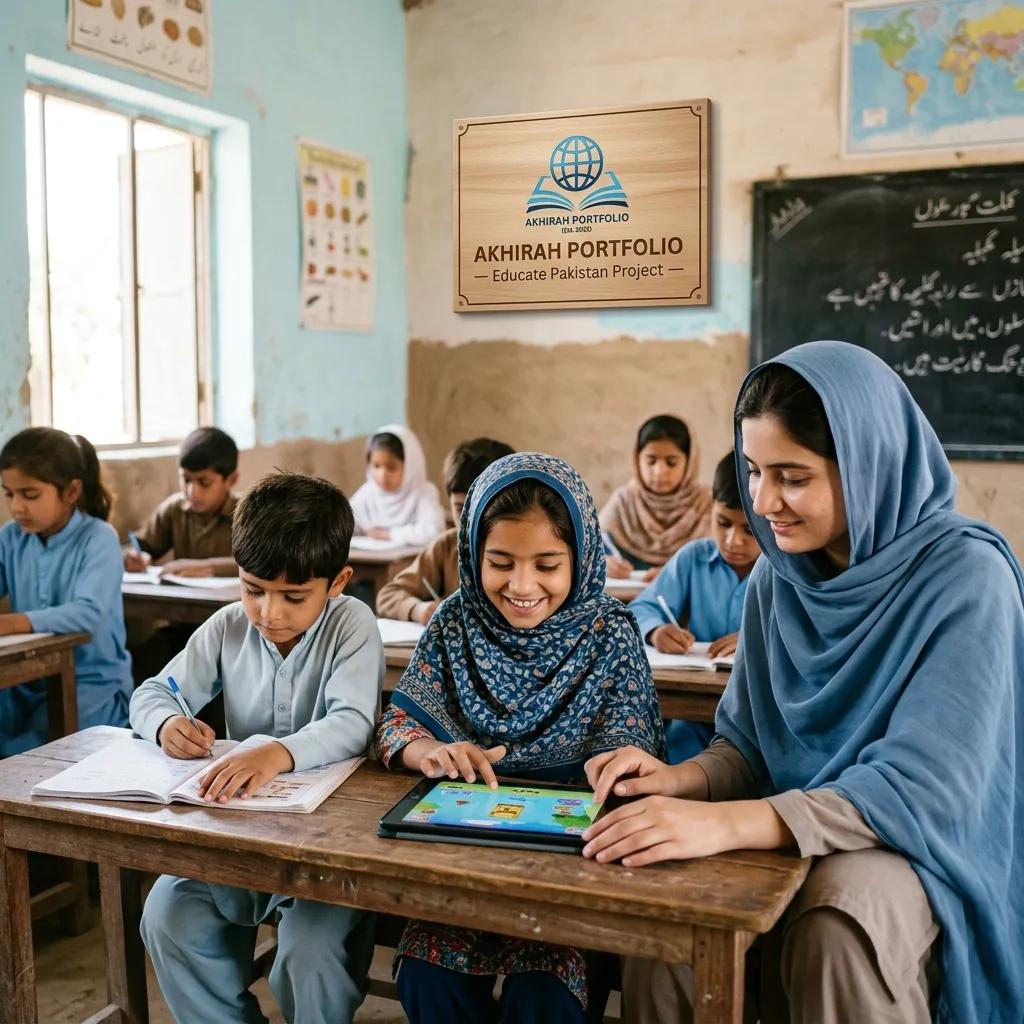
The Prophet, peace be upon him, said that beneficial knowledge continues after death. A school, done properly, is the most concentrated form of that that I know how to build.
Fund a share in the Classroom in South Asia (£65 per share) or the Fully Equipped School in Pakistan (£750 per share).